
Top Upholstery Fabrics Dubai for Hot Climate
Dubai’s climate is beautiful most of the year, but it is tough on furniture. Intense sunlight, high humidity, and long stretches of heat can fade colours, weaken fibres, and shorten the life of a sofa faster than almost anywhere else in the world. That is why choosing the right Upholstery Fabrics Dubai residents can rely on is not just a style decision — it is a practical one.
If you are reupholstering an old sofa, updating dining chairs, or furnishing a new home, this guide walks you through the fabrics that genuinely hold up in Upholstery Dubai‘s weather, what to look for before you buy, and how to keep your furniture looking new for years.
Why Climate Matters When Choosing Upholstery Fabrics Dubai
Before comparing fabric types, it helps to understand what Dubai’s climate actually does to furniture:
- UV exposure from year-round sun causes ordinary dyes to fade within months, especially near windows and balconies.
- High humidity, particularly in summer, encourages mould and mildew in fabrics that do not breathe well.
- Heat and air conditioning cycles cause repeated expansion and contraction, which can loosen weak weaves over time.
- Dust and sand, common in outdoor and semi-outdoor seating areas, wear down low-density fabrics faster than expected.
A fabric that performs beautifully in a cooler, drier climate may not survive its first Dubai summer. That is why local upholsterers recommend performance-driven materials over purely decorative ones.
Best Upholstery Fabrics Dubai Homes Are Choosing This Year
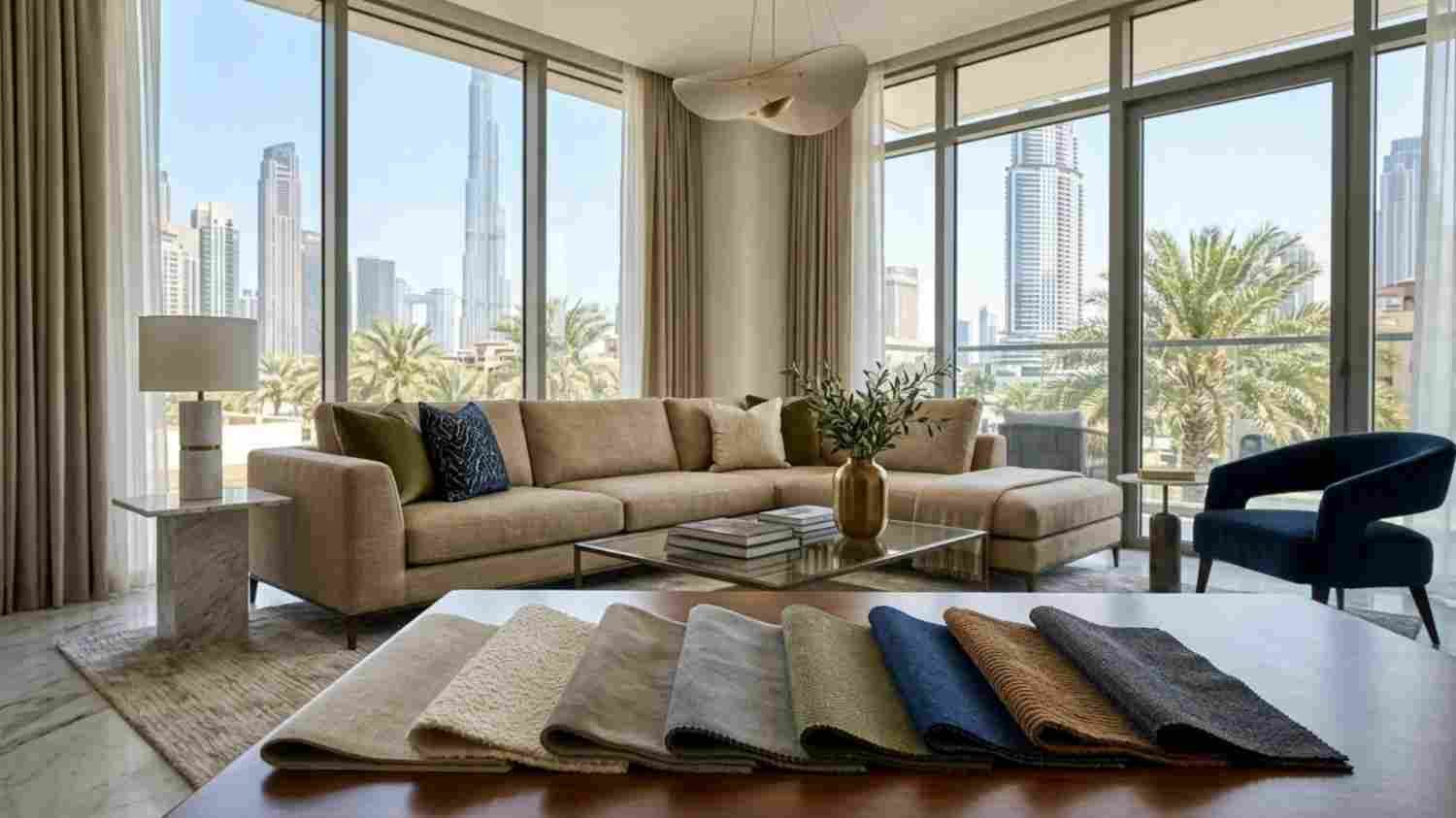
1. Performance Acrylic (Sunbrella-Type Fabrics)
Solution-dyed acrylic fabrics are one of the most reliable choices for Dubai homes. The colour is woven into the fibre rather than applied on top, so it resists fading even under direct sun for years. These fabrics also dry quickly and resist mildew, making them ideal for balconies, terraces, and sunrooms.
2. Polyester Blends
Polyester upholstery fabric is a favourite for both indoor and outdoor furniture in the UAE. It resists wrinkling, holds its shape, and is naturally more resistant to sun damage than cotton or linen. Blended with other fibres, it also becomes more breathable, which helps in humid conditions.
3. Treated Linen
Pure linen looks elegant but can struggle with Dubai’s humidity. Treated or coated linen blends solve this by adding stain resistance and moisture control while keeping the natural, textured look homeowners love for living rooms and formal seating.
4. Leather and Faux Leather
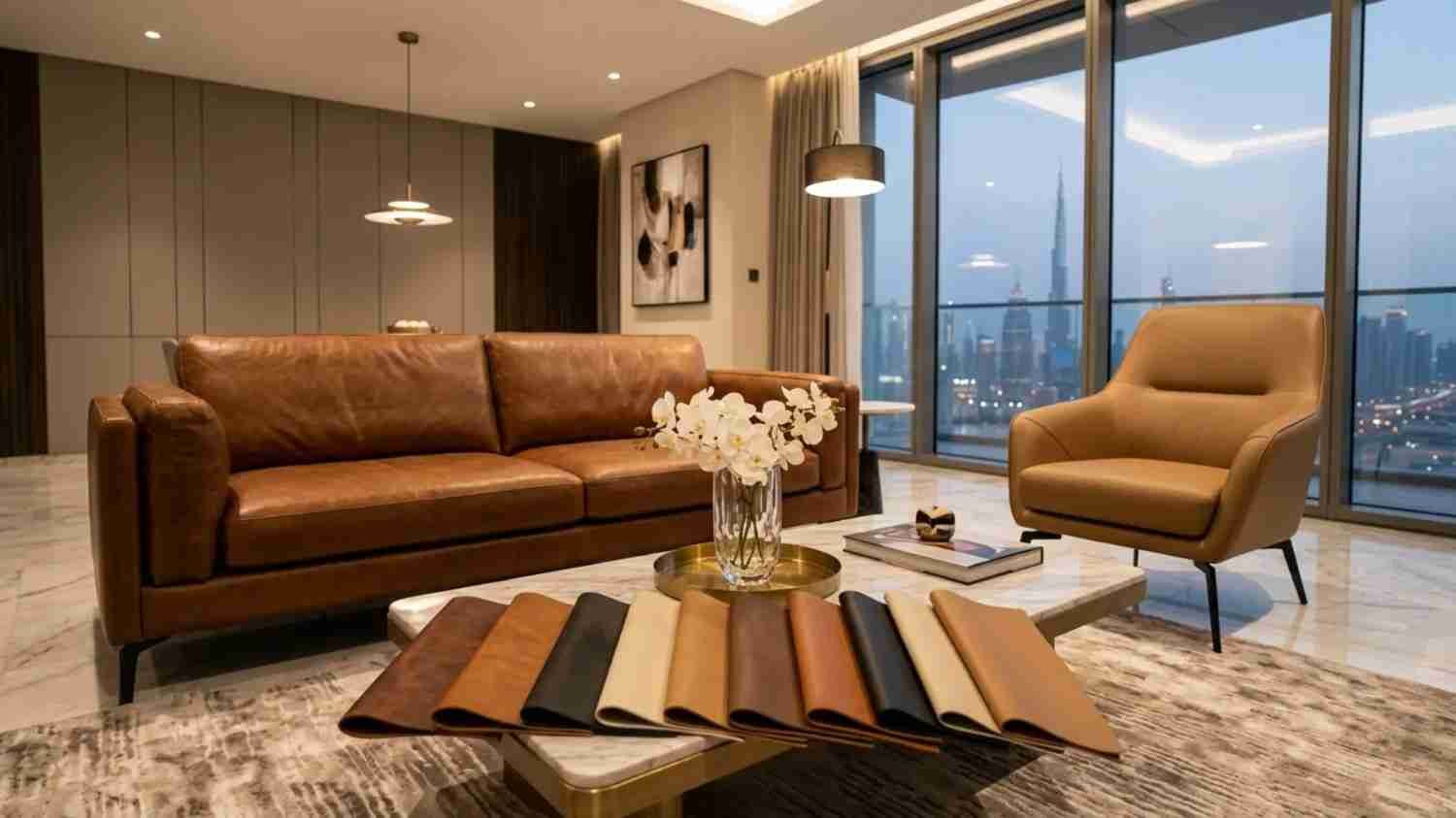
Leather remains a popular choice for statement sofas and headboards because it is durable and easy to wipe clean. In hot climates, look for leather that is specifically treated to resist cracking from heat exposure, or choose high-quality faux leather, which handles temperature changes well and costs less to maintain.
5. Microfiber
Microfiber is a practical option for busy households. It is soft, stain-resistant, and holds up well against everyday wear, pets, and children — all without needing constant special care.
6. Crypton and Other Performance Fabrics
For homes that want maximum protection, performance fabrics such as Crypton are built to resist stains, odours, and moisture at a fibre level. These are especially useful for dining chairs, family rooms, and furniture that sees heavy daily use.
What to Look for Before You Buy
When comparing Upholstery Fabrics Dubai suppliers offer, keep these four factors in mind:
- UV resistance — solution-dyed or UV-stabilised fabrics hold colour far longer than printed ones.
- Breathability — fabrics that allow airflow reduce the risk of mould in humid months.
- Rub count (Martindale rating) — a higher rub count means better durability for high-traffic sofas and chairs.
- Ease of cleaning — stain-resistant coatings save time and protect the fabric’s lifespan.
A good local upholsterer will walk you through fabric samples and explain which option suits your specific furniture, room exposure, and household needs.
Indoor vs Outdoor Fabric Choices
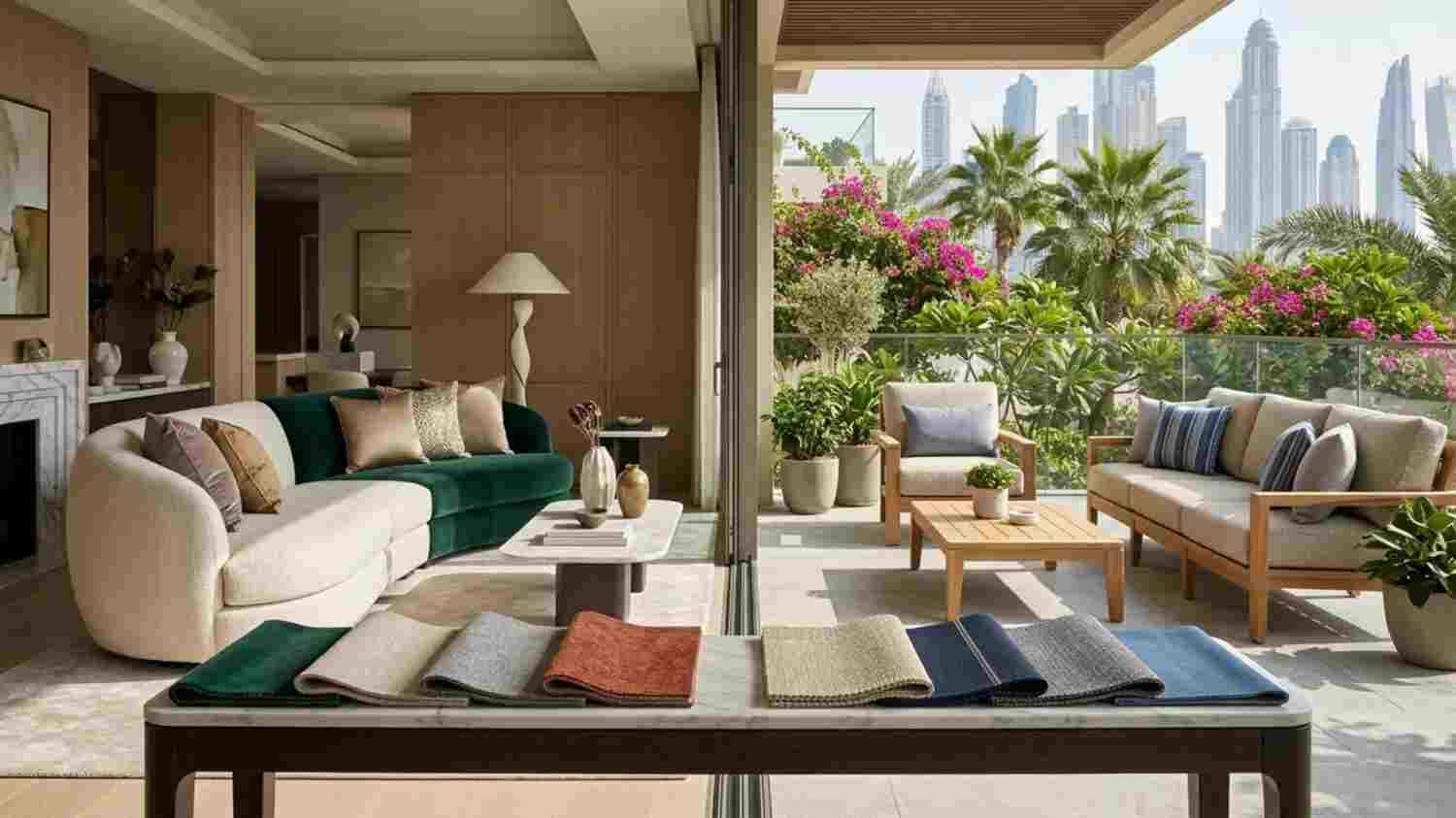
Not every fabric that works indoors will survive outdoor exposure, and vice versa. Indoor pieces have more flexibility with natural fibres like linen and wool, since they are shielded from direct sun and rain. Outdoor and semi-outdoor furniture, on the other hand, needs fully weatherproof materials. If you are furnishing a balcony, poolside seating area, or covered terrace, it is worth exploring dedicated outdoor upholstery solutions designed specifically for Dubai’s sun and humidity.
Bedroom furniture has its own considerations too — fabric choice affects both comfort and appearance on pieces like headboard upholstery, where breathable, easy-to-clean materials are just as important as the design.
Fabric Care Tips for Dubai’s Climate
- Vacuum upholstery weekly to prevent dust and sand particles from settling into the weave.
- Keep sun-facing furniture away from direct window exposure where possible, or use UV-filtering window film.
- Clean spills immediately with a damp cloth to prevent staining before it sets into humid fabric.
- Rotate cushions regularly so wear and fading happen evenly.
Schedule professional deep cleaning every 6–12 months to extend fabric life.
Frequently Asked Questions
Which upholstery fabric lasts longest in Dubai’s heat?
+
Solution-dyed acrylic and high-quality polyester blends generally last the longest, since they resist both fading and humidity-related damage better than natural fibres.
Is leather a good choice for Dubai’s climate?
+
Yes, as long as it is properly treated. Leather placed near direct heat sources or windows should be conditioned regularly to prevent cracking.
Can I use the same fabric indoors and outdoors?
+
It is not recommended. Outdoor areas need weatherproof, UV-stabilised fabrics, while indoor furniture has more flexibility with natural and blended materials.
How often should I replace upholstery fabric in Dubai’s climate?
+
With proper care, performance fabrics like acrylic or polyester blends can last 8–10 years even in Dubai’s heat. Natural fibres exposed to direct sun may need replacing sooner, closer to every 4–5 years.
Does fabric colour affect how well it handles Dubai’s heat?
+
Yes. Lighter, solution-dyed colours generally resist visible fading better than dark shades, since dark colours absorb more heat and show sun damage faster over time.
Are natural fabrics like cotton and wool suitable for Dubai homes?
+
They can work well indoors, away from direct sunlight and humidity, such as in air-conditioned living rooms. For sun-facing furniture or humid areas, a treated or blended fabric is a safer choice.
How much does reupholstering furniture typically cost in Dubai?
+
Cost depends on the furniture size, fabric choice, and amount of frame or foam repair needed. Most providers offer a free home visit and a clear price quote before any work begins, so it’s worth requesting one for an accurate estimate.
Final Thoughts
Choosing the right Upholstery Fabrics Dubai weather demands can make the difference between furniture that looks tired within a year and furniture that stays beautiful for a decade. Whether you are leaning toward performance acrylic, treated linen, or classic leather, the key is matching the fabric to how — and where — the furniture will actually be used.
If you are ready to refresh your sofas, chairs, or headboards with fabric built for Dubai’s climate, explore Plush Dubai’s upholstery services for free fabric samples, a home visit, and a clear price quote before you commit.