
Leather vs Fabric Upholstery: Which Is Better?
It’s one of the first questions that comes up in almost every upholstery project we take on: leather or fabric? And honestly, there’s no universal right answer — it depends on the room, the household, and how the piece actually gets used day to day. What we can do is walk you through exactly how the two compare, so you can make the call with real information instead of just going with whatever looks best in a showroom.
At Plush Dubai, we work with both materials constantly, and this is the same breakdown we give clients before they commit to either leather upholstery in Dubai or a fabric alternative.
The Basic Trade-Off
Before getting into specifics, it helps to understand the core trade-off. Leather tends to win on longevity, ease of cleaning, and a more polished, formal look. Fabric tends to win on comfort, variety, and everyday livability, especially for families and high-use furniture. Neither is universally the best upholstery material — it’s about matching the material to the room.
Comfort and Feel

Fabric is generally the more comfortable option, especially in a climate like Dubai’s. It doesn’t get uncomfortably warm or sticky against skin the way leather can during the hotter months, and it has a softer, more relaxed feel that suits everyday lounging. This is one of the main reasons fabric upholstery in Dubai remains the more popular choice for family living rooms and pieces used daily.
Leather, on the other hand, offers a smoother, more tactile feel that many people associate with a premium look. It doesn’t absorb odors the way fabric can, and it has a distinct texture that develops character over time. The trade-off is that leather can feel cold when you first sit down and, depending on the finish, may feel warmer than fabric during peak summer heat.
Durability and Everyday Wear
This is where Leather vs Fabric generally has the edge. Quality leather resists punctures, doesn’t pill or fray, and holds up remarkably well to years of regular use — provided it’s properly conditioned. It’s a strong option for households without small children or pets, or for pieces that see moderate rather than heavy daily use.
Fabric durability varies enormously depending on the weave and fiber. A well-chosen, tightly woven fabric can be just as durable as Sofa Upholstery Dubai in practice, while a loosely woven or delicate fabric will show wear far faster. This is exactly why material selection matters as much as the leather-vs-fabric decision itself — not all fabric is created equal.
Cleaning and Maintenance
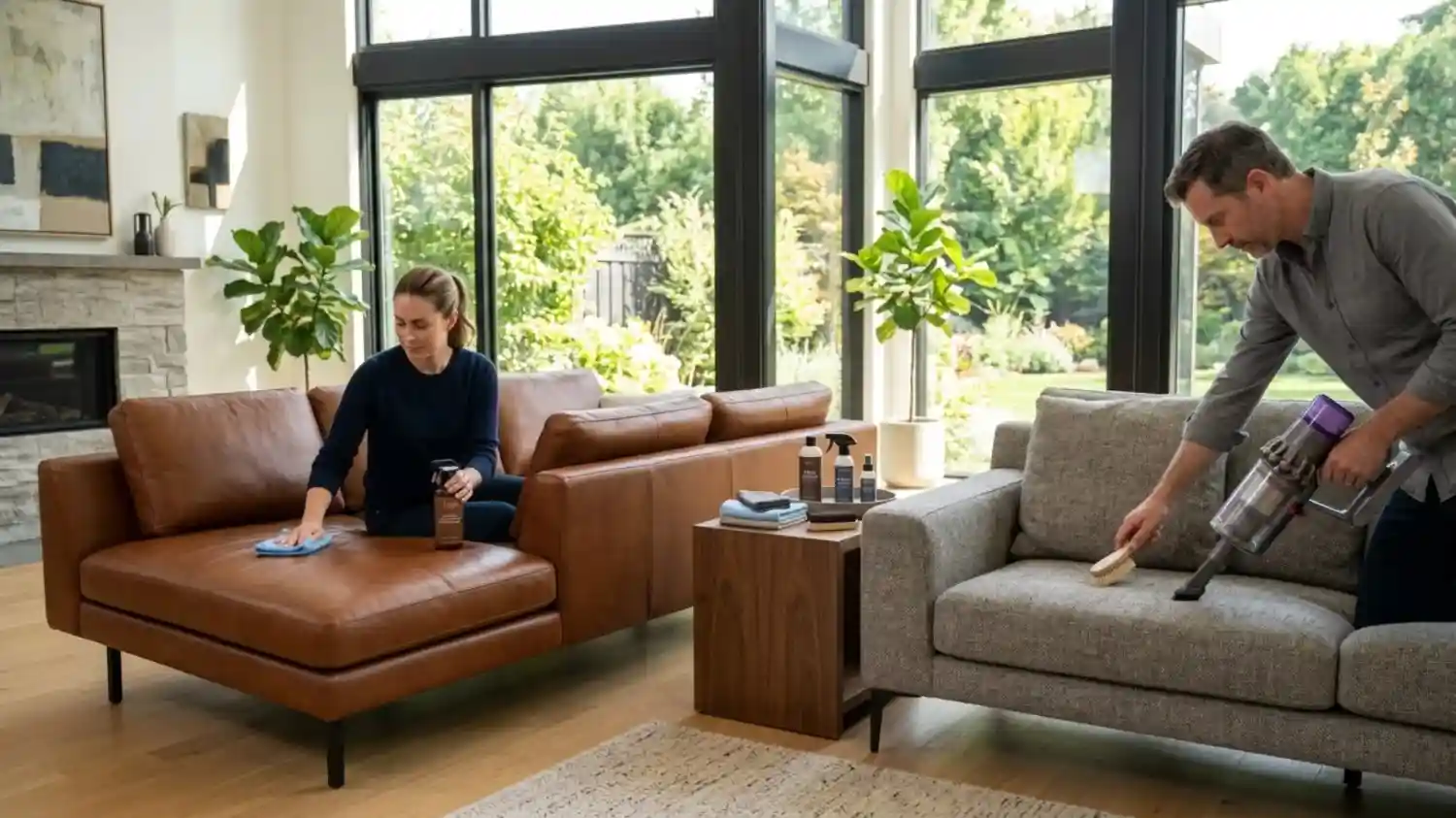
Leather is generally easier to maintain on a day-to-day basis. Spills wipe off the surface rather than soaking in, and regular dusting is usually enough to keep it looking presentable. It does need periodic conditioning to prevent drying and cracking, particularly in warmer, drier conditions.
Fabric requires more active care. Spills need to be blotted quickly before they set, and fabric generally benefits from professional cleaning every so often to maintain its appearance. That said, fabric is more forgiving of everyday mess in households with kids or pets, since minor marks are less visible and stains can often be treated without permanently affecting the material.
Style and Design Flexibility
Fabric wins clearly here. The range of colors, patterns, and textures available in fabric far exceeds what’s possible with leather, which makes it the more flexible choice if you’re working with a specific color palette or want to introduce pattern into a room.
Leather brings a different kind of design value — a more timeless, refined look that doesn’t rely on trend-driven colors or patterns to feel current. A well-chosen leather piece tends to age into the room rather than looking dated the way a very trend-specific fabric print sometimes can.
Cost Considerations
Leather upholstery is typically a larger upfront investment than fabric, largely due to material cost. However, because quality leather tends to last longer with proper care, the cost-per-year of ownership can end up more comparable than the initial price tag suggests. Fabric offers a lower entry cost and more flexibility to update or replace pieces more frequently without as significant a financial commitment.
Leather vs Fabric: Quick Comparison
For a side-by-side look before you decide, here’s how the two materials stack up across the factors that matter most:
| Factor | Leather Upholstery | Fabric Upholstery |
|---|---|---|
| Comfort in warm climates | Can feel warm or sticky in heat | Stays comfortable year-round |
| Durability | Excellent with proper conditioning | Varies by weave; tightly woven fabric lasts well |
| Cleaning & maintenance | Wipes clean easily; needs periodic conditioning | Needs prompt blotting; benefits from professional cleaning |
| Resistance to spills & stains | Strong — spills sit on the surface | Moderate — depends on fabric treatment |
| Design & color variety | Limited to natural leather tones and finishes | Wide range of colors, patterns, and textures |
| Feel & comfort | Smooth, cool to the touch initially | Soft, warm, relaxed feel |
| Best suited for | Formal spaces, statement pieces, low-traffic areas | Family rooms, high-use furniture, homes with kids or pets |
| Upfront cost | Higher initial investment | Lower entry cost, more affordable to update |
| Longevity with care | Long-lasting, ages with character | Long-lasting if fabric quality is high |
This table is a useful starting point, but as covered above, the right choice still comes down to the specific room and how the furniture will actually be used.
Which Rooms Suit Which Material

A simple way to think about it room by room:
- Family living rooms and high-use spaces — fabric is usually the more practical choice, given its comfort and forgiving nature with everyday wear.
- Formal living rooms or studies — leather often makes more visual sense, lending a polished, put-together look to spaces used less frequently.
- Homes with young children or pets — fabric generally handles accidents and rough use better, though performance fabrics have narrowed this gap significantly in recent years.
- Statement pieces — a single leather armchair or accent piece can work beautifully even in an otherwise fabric-furnished room, adding contrast without a full commitment to leather throughout.
Frequently Asked Questions
Our Recommendation
If we had to give one general answer: choose Leather vs Fabric for comfort-first, high-use furniture, and leather for statement pieces or lower-traffic formal spaces. But the honest answer is that the right material depends entirely on how you actually live with the piece — which is exactly the kind of question worth talking through before committing to either.
At Plush Dubai, our team handles both leather upholstery in Dubai and fabric projects across sofas, chairs, and custom pieces. Get in touch, and we’ll help you figure out which material actually fits your space and lifestyle — not just which one looks best in a photo.